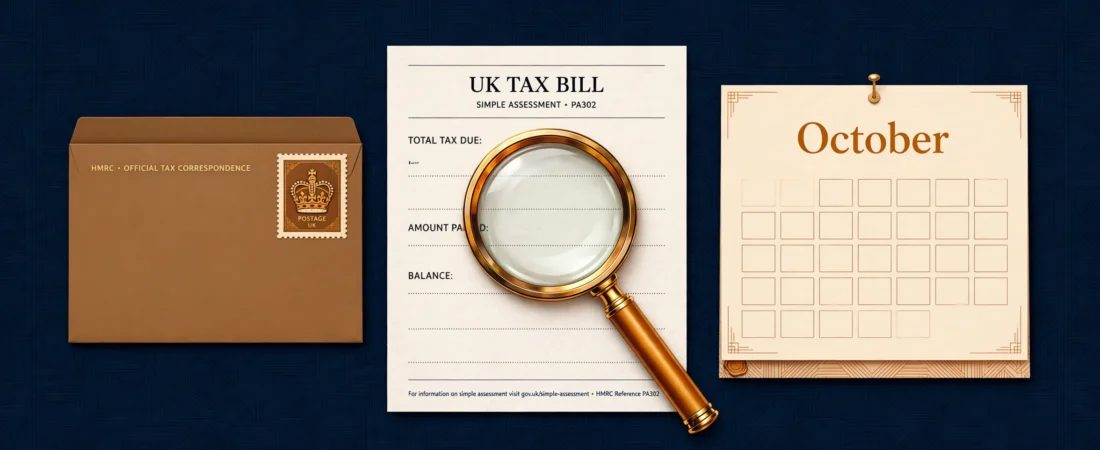
HMRC is sending a second wave of Simple Assessment letters between October and December 2026. If one lands on your doormat, do not ignore it, and do not pay it straight away without checking. The new letter shows your whole year’s tax bill, and it can include amounts you have already paid.
This is the letter HMRC calls a PA302. Around 1.8 million are expected for the 2025 to 2026 tax year. Here is what the letter means, why a second one can arrive, and how to make sure you pay the right amount and not twice.
What Is a Simple Assessment?
A Simple Assessment is HMRC’s way of collecting tax when it cannot take it through your PAYE tax code and you are not in Self Assessment. Instead of asking you to file a tax return, HMRC works out the bill from information it already holds and sends you the result.
Your letter sets out your taxable income, the tax you have already paid, the amount you still owe, a 14-character payment reference starting with X, and the date you must pay by. Common triggers include tax on pension income, savings interest, dividends, a second source of income that was never taxed, or more tax-free allowance than you were entitled to. HMRC typically uses this route when the amount owed cannot be collected through a tax code, which usually means £3,000 or more.
Simple Assessment is not the same as Self Assessment. If you are registered for Self Assessment, you should not receive one. If one arrives anyway for a year you already file for, contact HMRC and ask for it to be withdrawn. If you think you should be in Self Assessment rather than receiving these letters, our missed-registration guide explains what to do.
Why Some People Get a Second Letter
HMRC sent the first batch of letters to working-age customers from 30 June 2026 and to pensioners from 12 August 2026. The second batch, due between October and December, follows once banks and building societies send HMRC their savings interest figures for the year.
That timing explains the catch. The second letter shows the full tax due for the whole year, including whatever the first letter covered. If you already paid the first bill, the new total may still include it. HMRC’s own letters now state this clearly: you do not need to pay the total shown if you have already made a payment towards a previous Simple Assessment bill from earlier in the year.
So the rule is simple. Take the new total, subtract what you have already paid, and pay only the difference. If you have paid nothing so far, the total stands as shown.
How to Check the Figures Before You Pay
Check the letter against your own records before you pay anything. Match employment and pension income against your P60 or P45, interest against your bank or building society statements, and benefits or State Pension against letters from the Department for Work and Pensions or Social Security Scotland.
Watch out for one classic trap with state benefits. If you are paid every four weeks, multiply the payment by 13 to get the annual figure, not 12. Two-weekly payments multiply by 26, monthly payments by 12. HMRC’s guidance uses the same method, and getting this wrong is a common source of apparent overcharges.
If a figure looks wrong, you have 60 days from the date on the letter to query it with HMRC by phone or in writing. Say which figures you dispute, give the numbers you think are right, and name the paperwork you checked them against. If HMRC agrees, it sends a corrected bill. If it disagrees, you get a decision letter and 30 days to appeal. Querying does not pause the bill, so the original deadline stands unless HMRC confirms a later date.
When the Money Is Due
The payment deadline depends on when your letter arrives. For the 2025 to 2026 year, letters received before 31 October 2026 need payment by 31 January 2027. Letters received on or after 31 October 2026 need payment within three months of the date on the letter.
You can pay through the HMRC app, online on GOV.UK, by bank transfer, or by cheque. Paying in instalments is also possible in some cases if you contact HMRC to arrange it.
Make Sure the Letter Is Genuine
Tax letters are a favourite tool for scammers, so check before you act. GOV.UK keeps a list of the letters HMRC is currently sending, and you can compare your letter’s name and reference number against it. HMRC’s Tax Confident campaign also explains common HMRC letters in plain English. If the letter appears there, that is a strong sign it is genuine. If it does not appear, it might still be genuine, but take extra care and contact HMRC using details from GOV.UK, not from the letter itself.
Your Three-Step Checklist
- Read the whole letter, especially the small print. Check the tax year, the total, and the payment deadline.
- Subtract anything you have already paid. The second letter shows the full year’s bill, so only pay the difference.
- Check the figures, then pay on time. Match the numbers to your own records, query anything wrong within 60 days, and pay by the deadline in the letter.
Our guide to the paper Self Assessment deadline explains the other autumn filing date to keep in mind, and our overview of key income tax rates can help you sense-check the figures in your letter.
Frequently Asked Questions
What is a Simple Assessment letter?
It is HMRC’s PA302 tax bill, sent when you owe Income Tax that HMRC cannot collect through your PAYE tax code and you are not in Self Assessment. It shows your taxable income, tax already paid, the amount owed, a payment reference, and the deadline.
Why have I received a second Simple Assessment letter?
HMRC sends a second tranche between October and December 2026 once it receives savings interest data from banks and building societies. The new letter shows the whole year’s bill, which can include amounts covered by your first letter.
How do I avoid paying twice?
Subtract any payment you have already made towards an earlier Simple Assessment bill for the same year from the new total, and pay only the difference. HMRC’s letters now state this explicitly.
When must I pay a Simple Assessment bill?
For 2025 to 2026, pay by 31 January 2027 if your letter arrived before 31 October 2026. If it arrived on or after 31 October 2026, pay within three months of the date on the letter.
What if the figures look wrong?
You have 60 days from the date on the letter to query the calculation with HMRC. If HMRC disagrees with your query, you can appeal within 30 days of its decision letter.
I am in Self Assessment. Should I have got one of these?
No. HMRC does not send Simple Assessments to people registered for Self Assessment. If you receive one, contact HMRC and ask for it to be withdrawn.
Disclaimers
Disclaimer:
This guide provides general information about Simple Assessment tax bills as of October 2026. Tax rules and government announcements can change. Nothing in this article is tax advice. Always consult with a qualified tax professional about your specific circumstances. That’s what we’re here for. In accordance with our normal practice we give this reference in good faith and in confidence, without legal liability on the part of the author or the company. The author assumes no responsibility or liability for any errors or omissions in the content of this site
The information provided in this blog is for general guidance and educational purposes only and does not constitute financial, tax, accounting or legal advice. iFiler, registered in England under Company Registration Number 15996173, has prepared this content to offer general insights into financial and taxation matters. Although we make every effort to ensure the accuracy and relevance of the information at the time of publication, we give no guarantee regarding completeness, accuracy or suitability for your specific circumstances.
Readers should not act, or refrain from acting, based solely on the information contained in this content. Always get professional advice tailored to your personal or business situation before making any financial or tax-related decision. iFiler accepts no liability for any loss or damage arising from reliance on the information in this blog.