
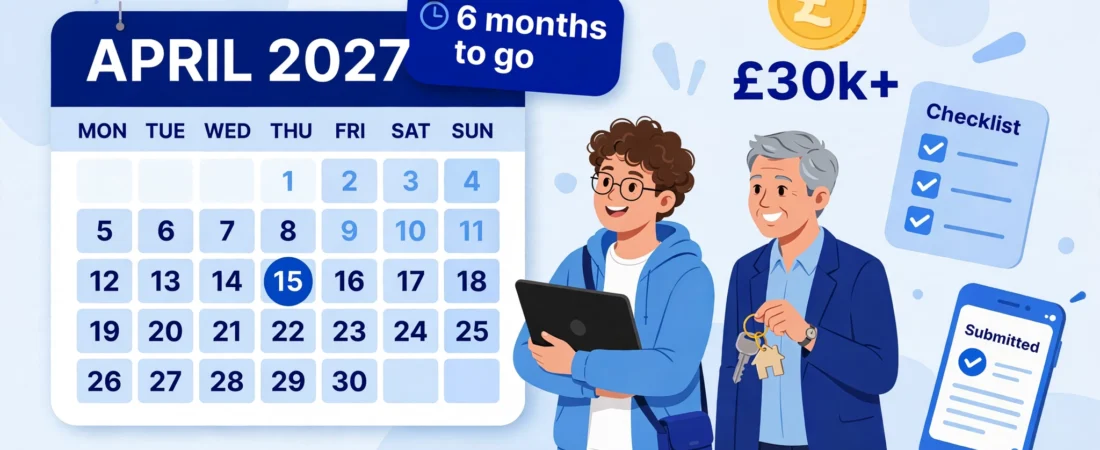
HMRC has started the countdown. On 5 October 2026 it urged sole traders and landlords with turnover over £30,000 to sign up for Making Tax Digital for Income Tax now. There are just six months to go until 6 April 2027, when MTD becomes compulsory for this group.
Around 1,077,000 more sole traders and landlords will join MTD from April 2027, based on HMRC analysis of 2024/25 Self Assessment returns. If your turnover is over £30,000, that almost certainly includes you.
Here is what the announcement means, and why acting now beats waiting until spring.
Who Is Affected
From 6 April 2027, MTD for Income Tax extends to sole traders and landlords with turnover of more than £30,000. This is the second wave of the rollout. Our full guide to the £30k threshold explains who is caught in detail.
The first wave is already live. Sole traders and landlords earning over £50,000 have been using MTD since April 2026. Their next milestone is the second quarterly update, due on 7 November.
The net keeps widening. From April 2028, the threshold falls again to £20,000. That will bring MTD to an even larger group of self-employed people and property owners.
How the Turnover Test Works
This is the part people get wrong. The £30,000 test is on turnover, not profit.
Turnover means your gross income from self-employment and property, before any tax allowances or expenses are deducted. If your rental income and freelance takings add up to more than £30,000 before costs, you meet the test, even if your profit is lower.
Check both income streams together. Many landlords with a side business cross the line without realising it.
What You Will Have to Do
Once MTD applies to you, three things change:
- Keep digital records. You must record income and expenses digitally throughout the year, not in a spreadsheet you update in January.
- Use compatible software. Quarterly updates must go through HMRC-recognised software. HMRC publishes a list of compatible products on GOV.UK.
- Send quarterly updates. You send HMRC short summaries of your income and expenses every quarter, then complete your tax return as normal.
The quarterly updates are not extra tax returns. They are brief summaries, and HMRC does not turn them into a bill. You settle your actual tax position later. Missed updates will eventually carry penalty points, so the quarterly habit matters from day one.
Why Sign Up for MTD Early
HMRC’s message is simple: signing up early gives you time to choose software that suits you and to get your details right from the start. You prepare in your own time instead of rushing in March.
There are practical wins too. Digital records kept through the year save hours of gathering paperwork at tax return time. You see your position as the year unfolds, not after it ends. And the businesses that start now will barely notice the switch in April. Those that wait will face a last-minute scramble.
If you use an agent, they can sign you up through GOV.UK as well.
What You Need to Sign Up
To sign up for MTD for Income Tax, you must be registered for Self Assessment and have submitted a tax return in the last two years.
If you missed the 5 October 2026 Self Assessment registration deadline, sort that first. You cannot join MTD without it.
Some people are exempt, including those who are digitally excluded. Check GOV.UK for the full list of exemptions before assuming the rules do not apply to you.
How iFiler Can Help
iFiler is HMRC-recognised software for MTD Income Tax. It keeps your digital records, totals your income and expenses for each quarter, and submits your updates to HMRC. It is free for now.
Starting early means your records are already digital and your software is already connected when April 2027 arrives. That is the whole point of HMRC’s six-month warning.
Final Thought
Six months sounds comfortable. It is not. Choosing software, moving your records across, and learning the quarterly rhythm takes longer than most people expect. Sign up now, while it is still a calm decision, not a forced one.
Frequently Asked Questions
6 April 2027. From that date, sole traders and landlords with turnover over £30,000 must keep digital records and send quarterly updates through compatible software. HMRC says there are six months to go and is urging this group to sign up now.
On turnover, not profit. Add up your gross income from self-employment and property before deducting any tax allowances or expenses. If the total is more than £30,000, you are in scope from April 2027.
Keep digital records of income and expenses, use HMRC-recognised software, and send quarterly summaries to HMRC. You still complete a tax return. The quarterly updates are short summaries, not additional returns, and they do not create a tax bill on their own.
You must be registered for Self Assessment and have submitted a tax return in the last two years. If you are not registered yet, do that first. Certain exemptions exist, including for people who are digitally excluded.
MTD is not compulsory for you in April 2027. But the threshold drops to £20,000 from April 2028, so check whether that catches you next. You can also join MTD voluntarily at any time.
Disclaimer:
This guide provides general information about MTD ITSA as of October 2026. Tax rules and HMRC guidance can change. Always consult with a qualified tax professional about your specific circumstances. That’s what we’re here for. In accordance with our normal practice this reference is given in good faith and in confidence, without legal liability on the part of the author or the company. The author assumes no responsibility or liability for any errors or omissions in the content of this site
The information provided in this blog is for general guidance and educational purposes only and does not constitute financial, tax, accounting or legal advice. iFiler, registered in England under Company Registration Number 15996173, has prepared this content to offer general insights into financial and taxation matters. Although every effort is made to ensure the accuracy and relevance of the information at the time of publication, no guarantee is given regarding completeness, accuracy or suitability for your specific circumstances.
Readers should not act, or refrain from acting, based solely on the information contained in this content. Professional advice tailored to your personal or business situation should always be obtained before taking any financial or tax related decision. iFiler accepts no liability for any loss or damage arising from reliance on the information presented in this blog.